
Exercise Stress Testing with an Ergometer Bike (E-Bike)
Cycle Understanding how your heart performs
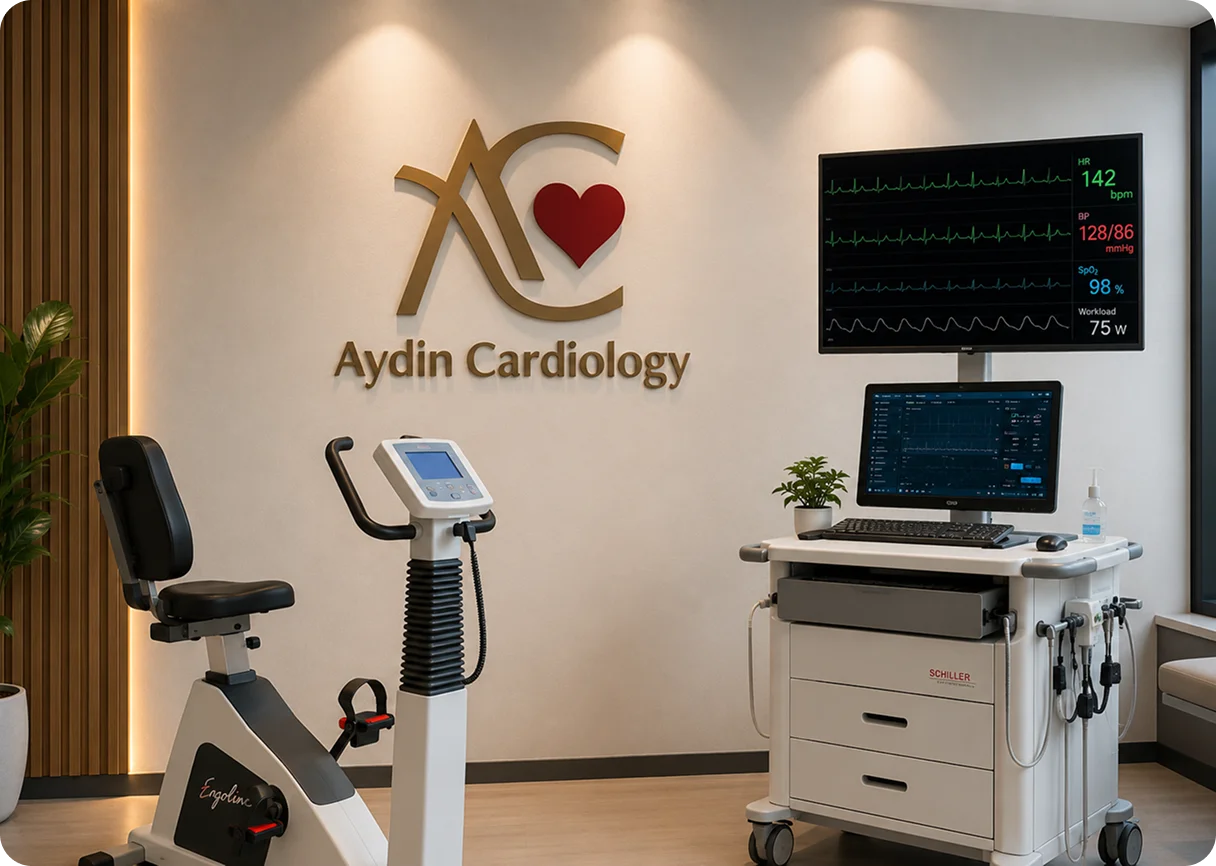
An E-Bike Stress Test assesses how your heart performs during physical activity using a medically calibrated exercise bicycle. During the test, your cardiologist monitors your heart rhythm, heart rate, blood pressure and symptoms as the workload gradually increases.
Instead of the treadmill stress test, the E-Bike allows you to exercise in a seated position, which is more suitable for patients with mobility and joint limitations.
Why have I been referred for an E-Bike Stress Test?
Your GP or specialist may recommend an E-Bike Stress Test to look into symptoms during physical activity, especially if seated exercise is more suitable for mobility, balance, comfort or joint health. Common reasons for the investigation include:
- Chest pain or discomfort
- Shortness of breath during exercise
- Palpitations or exercise-related arrhythmias
- Reduced exercise tolerance
- Coronary artery disease
- High blood pressure
- Heart valve disease
- Cardiomyopathy
- Congenital heart disease
- Assessment before starting an exercise program
- Follow-up after cardiac surgery or coronary intervention
What to expect during an E-Bike Stress Test
Appointments usually take 30 to 45 minutes, with the active or exercise portion lasting approximately 8 to 12 minutes.
ECG electrodes are placed on your chest and a blood pressure cuff is fitted before you begin cycling at a comfortable pace. The workload gradually increases while your cardiologist continuously monitors your heart rhythm, blood pressure, heart rate and any symptoms you experience.
After reaching your target heart rate or maximum exercise capacity, you’ll enter a short recovery period before your results are reviewed.
What does an E-Bike Stress Test assess?
An E-Bike Stress Test helps your cardiologist look into your:
- Blood flow to the heart during exercise
- Exercise-induced ECG changes
- Cardiac arrhythmias
- Exercise-induced high blood pressure
- Exercise capacity
- Heart rate recovery
- Functional limitations

Your E-Bike Stress Test with Aydin Cardiology
Contact our Dandenong clinic to book an E-Bike Stress Test, another specialist cardiac test or specialist review.
Frequently Asked Questions
An E-Bike Stress Test is performed while seated, making it a suitable option for many patients with joint pain, balance concerns or reduced mobility. It gives more range of control to workload adjustments also, for more accurate blood pressure monitoring during exercise.
Wear comfortable clothing and enclosed walking shoes suitable for exercise. Avoid heavy meals for two to three hours before your appointment and stay well hydrated. Your referring doctor or our clinic will let you know if any additional preparation is required.
Most patients can continue taking their usual medications. However, you may be asked to temporarily stop taking certain heart medications before your E-Bike Stress Test. Please follow the instructions provided by your referring doctor or our clinic.
Yes. The test is supervised throughout by experienced cardiac professionals and can be stopped at any time if required. Your comfort and safety are monitored continuously during the examination.
Yes. Unlike a treadmill stress test, an E-Bike Stress Test is performed while you remain seated. This makes it a suitable option for many patients with knee or hip problems, balance concerns or reduced mobility, while still providing valuable information about how your heart performs during exercise.
Information for referring doctors
Aydin Cardiology welcomes referrals for E-Bike exercise stress testing and specialist cardiac assessment, providing:
- Specialist-reported results with clinical context
- Timely delivery of reports and findings
- Access to further investigation, including stress echocardiography, ECG, Holter monitoring, HeartBug monitoring, ambulatory blood pressure monitoring and echocardiography if required
Aydin Cardiology works closely with local practitioners to support your patient’s health. You will receive regular updates for your patient’s ongoing care.