
Stress Echocardiography (Exercise Stress Echo)
Understanding how your heart performs
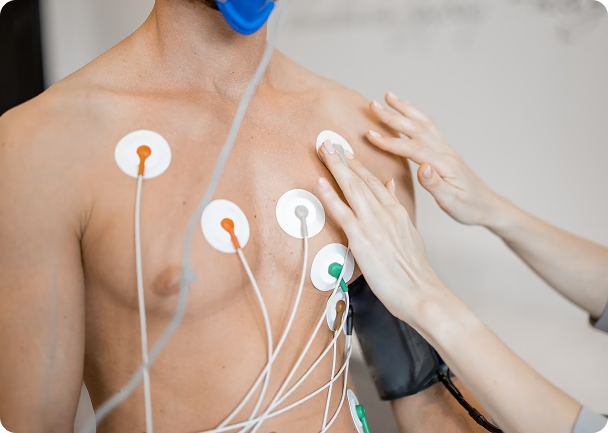
A stress echocardiogram combines a heart ultrasound with exercise on a treadmill to see how your heart performs under physical stress. By comparing images taken before and after the test, it can help detect reduced blood flow to the heart muscle and underlying heart conditions.

Why have I been referred for a Stress Echocardiogram?
Your GP may recommend a stress echocardiogram if your symptoms occur during physical activity or if further investigation of your heart function is required, like:
• Chest pain or suspected angina
• Shortness of breath during exercise
• Investigation of coronary artery disease
• Palpitations or exercise-related symptoms
• Assessment of heart valve disease
• Cardiac assessment before surgery
• Clearance before returning to exercise
What to expect during an Echocardiogram
A stress echocardiogram usually takes 45 to 60 minutes.
Your appointment begins with resting ultrasound images of your heart. You will then walk on a treadmill while your heart rate, blood pressure and ECG are continuously monitored. Immediately after exercise, additional ultrasound images are taken to compare how your heart functions during stress and at rest.
A cardiologist reviews your results, discusses any significant findings and provides a report to your referring doctor to support your ongoing care.
What does a Stress Echocardiogram do?
A stress echocardiogram helps your cardiologist assess:
- Blood flow to the heart muscle during exercise
- Coronary artery disease
- Heart muscle function under stress
- Heart valve function during exercise
- Exercise capacity
- Possible causes of chest pain or shortness of breath
Information for referring doctors
Aydin Cardiology welcomes referrals for stress echocardiography and specialist cardiac assessment, providing:
- Specialist-reported results with clinical context
- Timely delivery of reports and findings
- Access to further investigation, including echocardiography, Holter monitoring, ABPM and electrocardiography if required
Aydin Cardiology works closely with local practitioners to support your patient’s health. You will receive regular updates for your patient’s ongoing care.
To refer, please email or visit our Referrers page.

Your Stress Echocardiogram with Aydin Cardiology
Contact our Dandenong clinic to book your stress echocardiogram or another specialist cardiac test.
Frequently Asked Questions
A stress echocardiogram assesses how your heart muscle and valves perform during exercise. It can help identify reduced blood flow to the heart, assess valve function and investigate symptoms that occur during physical activity.
Not quite. An exercise stress test (exercise ECG) records the electrical activity of the heart during exercise using ECG leads. A stress echocardiogram includes the exercise ECG, plus ultrasound images of the heart before and after exercise. This shows the cardiologist the electrical changes, but also how well the heart muscle contracts and if there are areas that aren’t receiving enough blood flow.
Most patients can continue taking their usual medications, although you may be asked to temporarily stop taking certain heart medications before your stress echocardiogram. Please follow the instructions provided by your referring doctor or our clinic.
Wear comfortable clothing and enclosed walking shoes suitable for exercising on a treadmill. Your referring doctor or our clinic will advise you if any specific preparation is required before your appointment.
Yes. Stress echocardiograms are bulk billed for eligible patients with a valid Medicare card and referral, so there are no out-of-pocket costs for the test.